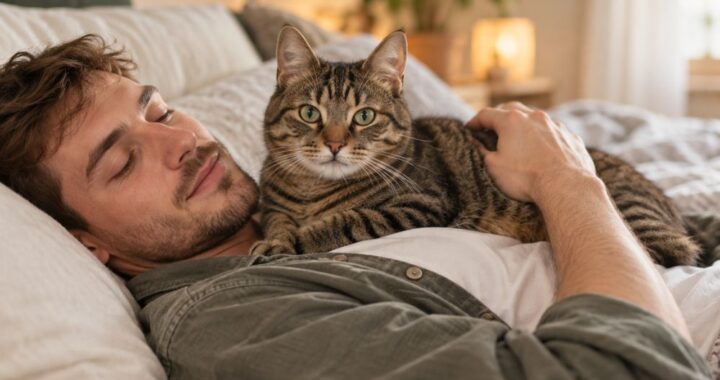
Can Cats Recognize Their Own Names, or Are They Just Responding to Your Voice?
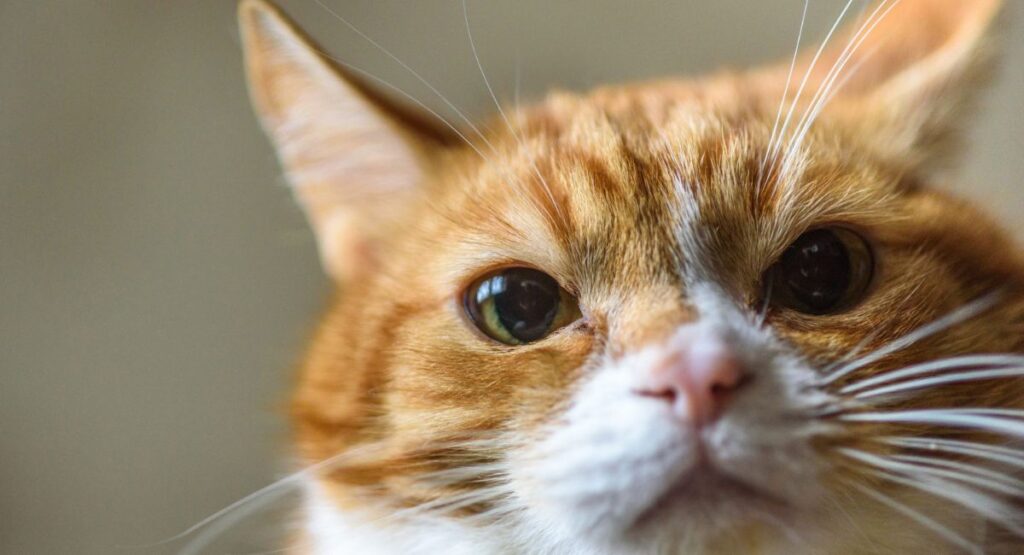
You call your cat’s name from the kitchen. Nothing.
You try again, slightly louder. Still nothing.
Then you open a can of food, and suddenly there’s a furry little creature standing at your feet, looking as though she’s been waiting for you all afternoon.
It’s tempting to conclude that cats don’t recognize their names. Perhaps they’re simply responding to familiar voices, certain tones, or the possibility of dinner.
But here’s something I find fascinating: scientists have actually tested this, and the evidence suggests cats really can distinguish their own names from other words.
What they do with that information is another matter entirely.
And I think understanding that distinction tells us something important about how cats communicate with us.
Scientists Put Cats’ Name Recognition to the Test
In 2019, researchers in Japan published a study in Scientific Reports that tackled a surprisingly difficult question: Can cats recognize the actual sounds of their names?
The researchers tested cats living in ordinary households and a cat café.
They played recordings of four words, followed by each cat’s name. The comparison words were chosen to resemble the name in length and accent, making it harder for cats to distinguish them using only simple sound patterns.
Initially, the cats reacted to the unfamiliar words. As the recordings continued, their responses generally weakened. Then came their own names.
Among cats that had become accustomed to the earlier words, researchers observed a renewed response when the cat’s name was played.
Usually, it wasn’t anything dramatic. A cat might move its ears, turn its head, or briefly become more attentive.
That tiny ear movement was enough to reveal something interesting.
The cats could tell that their names sounded different from the other words.
Better still, the researchers found that household cats could distinguish their names even when an unfamiliar person spoke them. That last detail matters enormously.
If cats were responding only to their owners’ voices, changing the speaker should have eliminated their ability to distinguish the name. But it didn’t.
The evidence points to recognition of the word itself, not merely the person saying it.
But Cats Recognize Your Voice, Too
Before we give cats too much credit for understanding human language, there’s another piece of research worth considering.
In 2013, researchers Atsuko Saito and Kazutaka Shinozuka conducted a study involving 20 domestic cats.
The cats heard recordings of strangers calling their names, followed by recordings of their actual owners.
As the unfamiliar voices continued, many cats gradually responded less. But when their owners’ voices appeared, their attention increased.
The researchers concluded that cats could distinguish their owners’ voices from those of strangers using sound alone. So yes, your voice absolutely matters.
Your cat can become familiar with the particular way you speak, and that familiarity helps shape its response.
But here’s where I think people make a mistake.
They assume that recognizing a person’s voice and recognizing a particular word must be competing explanations. They aren’t.
Your cat can recognize both your voice and its name. One ability doesn’t cancel out the other.
In fact, the more interesting question is how those two forms of recognition work together during ordinary interactions.
Your Cat May Even Recognize That Special Voice You Use
You know the voice. The slightly higher-pitched, unusually affectionate one that comes out when you’re talking to your cat. Most of us have one, whether we admit it or not.
Interestingly, a study of cat-directed speech published online in 2022 found that cats could distinguish speech directed specifically toward them from ordinary adult-directed speech when their owners were speaking.
The researchers studied 16 cats using recorded speech. When strangers spoke, however, the cats didn’t show the same discrimination between speaking styles.
The results suggest that cats become familiar with the particular communication patterns they share with their owners. I find that rather lovely.
Not because it means cats understand every affectionate sentence we say, but because it suggests our everyday conversations help build a recognizable relationship.
That ridiculous voice you use to ask whether your cat is the prettiest creature in the universe?
It might not be quite as ridiculous to your cat as it sounds to everyone else.
Cats Might Know Other Cats’ Names as Well
Here’s where the research gets even more interesting. A 2022 study on cats and names investigated whether cats could associate the names of familiar companions with their faces.
Researchers played recordings of a companion cat’s name and then displayed a photograph.
Sometimes the name matched the cat in the picture. Sometimes it didn’t.
Household cats spent longer looking at the screen when the name and photograph didn’t match.
The researchers interpreted this as evidence that the cats had learned an association between their companions’ names and faces.
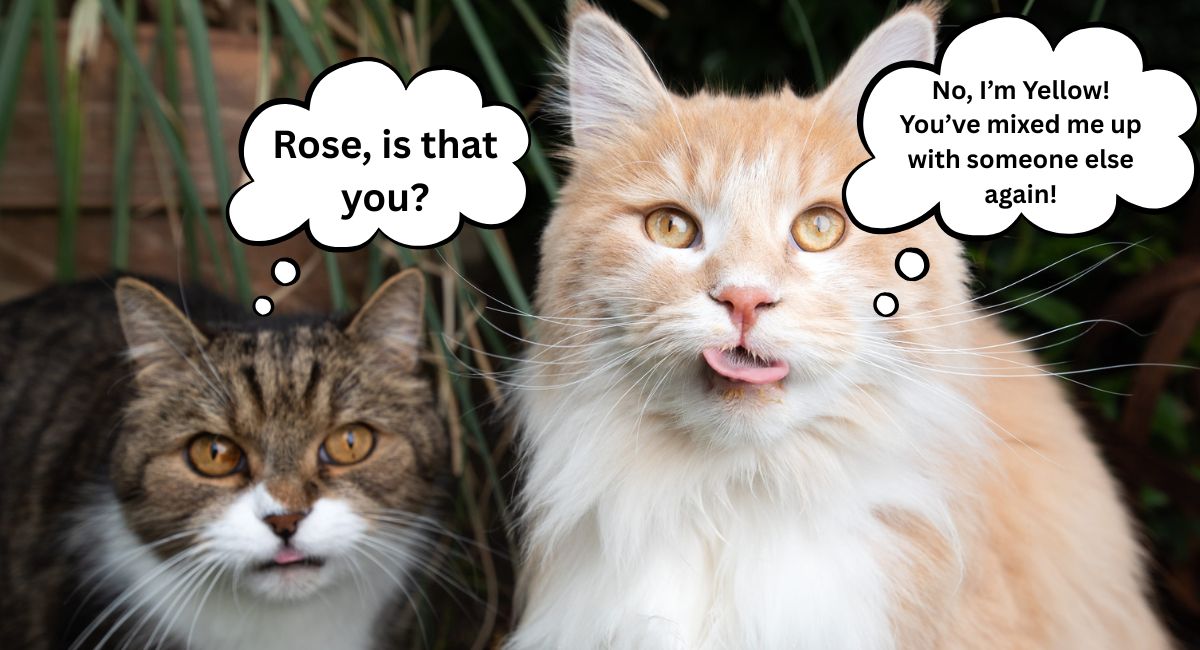
Cats living in a cat café didn’t demonstrate the same pattern. That difference suggests the social environment may influence how cats learn names. Think about what this means for a moment.
A cat might learn another animal’s name simply by living alongside it and hearing people use that name regularly.
Not through formal training. Not through commands. Just through ordinary household life.
We still shouldn’t confuse this with a human understanding of names or identity. The research doesn’t establish that cats possess the same concept of a personal name that we do.
But it does make the old idea that cats barely pay attention to human conversations look increasingly unconvincing.
Why Does Your Cat Ignore You When You Call?
This is the part that causes the most confusion. People frequently judge a cat’s understanding by whether it responds in the way they expect.
Call a dog, and there’s a reasonable chance you’ll get an enthusiastic visitor. Call a cat, and you might receive a brief glance before it returns to watching a bird outside.

I’ve never liked the conclusion people draw from that comparison. We call cats stubborn, arrogant, or incapable of affection when they don’t behave like dogs.
I think that’s a remarkably unfair standard for an entirely different animal. Recognizing a name and choosing to approach are separate behaviors.
A cat might hear its name and recognize the sound without having learned that it should come when called.
The video below shows how cats can recognize their names while responding with subtle signals, such as an ear twitch or a slight head movement, rather than coming when called.
Its response may also depend on what it’s doing, how comfortable it feels, and what previous experiences have taught it to expect.
If hearing its name frequently leads to something pleasant, the cat may become more attentive.
If its name regularly precedes being picked up when it doesn’t want to be, that association could be considerably less appealing.
And sometimes, frankly, whatever is happening outside the window may simply be more interesting.
An important distinction: a cat that doesn’t visibly respond hasn’t necessarily failed to recognize its name. But we also can’t confidently assume every unresponsive cat understood and deliberately ignored us.
The science doesn’t let us read their minds.
How to Tell Whether Your Cat Knows Its Name
You can try a simple observation exercise at home, although it won’t provide the controlled evidence of a scientific experiment.
- Say a neutral word in your normal speaking voice, without making gestures or offering food.
- After a short pause, say another word of similar length.
- Repeat with a few different words, keeping your tone and volume reasonably consistent.
- Finally, say your cat’s name and watch for a change in attention.
The video below highlights some of the subtle behaviors that may indicate a cat recognizes its name, including changes in attention, ear movements, and body language.
Don’t repeatedly call its name until you get the response you want. That defeats the point.
And remember that one attempt proves very little. Cats respond to all sorts of environmental cues, and even your own expectations can influence what you notice.
If your cat doesn’t react, don’t take it personally.
Can You Teach a Cat to Respond to Its Name?
Absolutely. And this is one area where I wish more cat owners would put a little effort into communication instead of complaining that their pets never listen.
Veterinary-reviewed guidance on teaching cats their names recommends building positive associations through rewards, play, and attention.
Start in a quiet room. Say your cat’s name once. When it looks toward you, immediately reward that response with a small treat, praise, or something else it enjoys. Keep practice sessions short and pleasant.
Once your cat reliably looks at you, you can gradually reward it for taking a step toward you, then for coming all the way over.
The video below shows how cats can learn to recognize their names through repeated everyday interactions and how even a small reaction can reveal that they’re paying attention.
There’s no need to turn every interaction into a training session. And please, don’t use your cat’s name mainly when you’re angry.
I would much rather teach an animal that hearing its name predicts something worthwhile than make that sound a warning that trouble is coming.
Your Cat Is Probably Listening More Than You Think
A recent survey of American cat owners found that 90% reported having a very strong emotional bond with their cats.
That doesn’t surprise me. What does surprise me is how often we still misunderstand the animals we feel so close to.
We want them to respond when we call, greet us enthusiastically, and demonstrate affection in unmistakable ways. Yet cats frequently communicate through much quieter signals.
The scientific evidence gives us good reason to believe many cats recognize their names. It also shows that they can identify familiar voices and learn associations from everyday human speech.
But none of that means they’ll perform on demand. And perhaps that’s what I’d most like cat owners to remember.
A relationship with an animal shouldn’t be measured entirely by how reliably it obeys us.
The next time you call your cat and receive nothing more than a slight movement of one ear, pay attention.
You may have just received an answer. It simply wasn’t the one you were expecting.