
How to Grow Avocado From Pit, Can You Really Turn a Grocery Store Avocado Into a Tree?
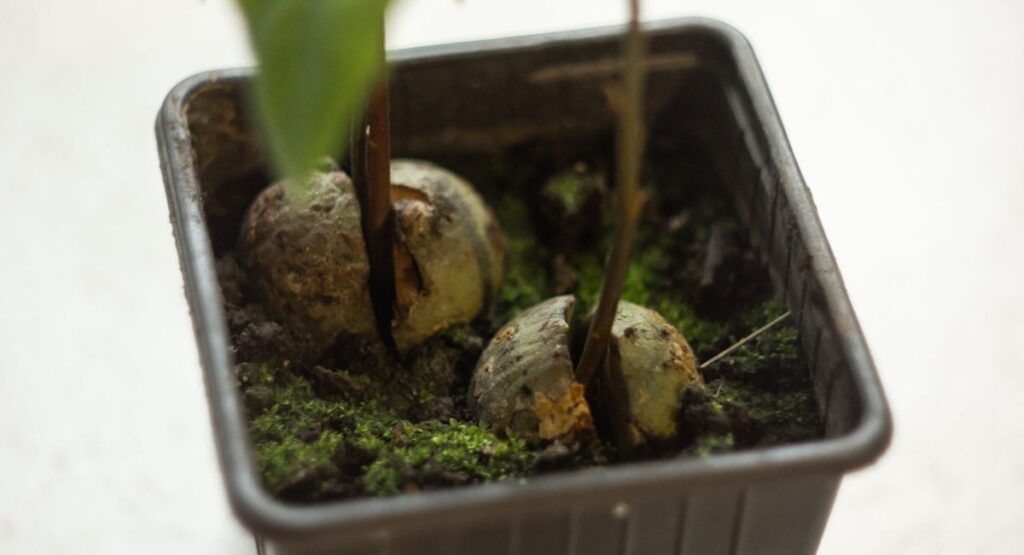
You slice open an avocado, scoop out the flesh, and find yourself holding that enormous brown pit in the middle. Normally, it goes straight into the trash.
But what if you stuck it in a glass of water instead? Could that slippery, oversized seed actually grow into a tree? And could you eventually walk into your backyard and pick avocados from something that started as a grocery store purchase?
Yes, you can grow an avocado tree from a supermarket pit. Growing avocados you can actually eat is an entirely different proposition. And I think that distinction matters enormously.
The internet is full of beautiful photographs of avocado pits suspended over glasses, with delicate roots dangling into the water. What those pictures rarely show is the next ten years.
Still, I wouldn’t discourage anyone from trying. Quite the opposite. I’m convinced that growing an avocado from a pit is one of the most satisfying little gardening experiments you can do at home. You just need to understand what you’re signing up for.
That Ugly Brown Pit Is More Impressive Than It Looks
My grandfather had a habit of seeing possibilities in things other people overlooked. Give him an ordinary piece of wood, and he’d start imagining what it might become. I think that attitude rubbed off on me.
There’s something genuinely appealing about taking an object destined for the garbage and giving it another purpose. It’s why I’ve always enjoyed woodworking, upcycling, and other hands-on DIY projects. An avocado pit fits that philosophy perfectly.
It doesn’t look particularly promising. It’s hard, slippery, and resembles a polished stone more than something alive. Yet inside is everything needed to begin growing a new avocado plant.
And unlike many gardening projects, this one requires almost no equipment. You don’t need expensive grow lights, elaborate propagation systems, or some miracle fertilizer advertised on social media.
A glass, some water, a few toothpicks, and patience will get you started. That last ingredient is where people struggle.

How to Grow an Avocado Pit in Water
The classic toothpick-and-water method is popular for a good reason: you can actually watch the roots develop.
I prefer it for beginners because there’s something rewarding about seeing what’s happening beneath the seed.
Here’s how to do it properly.
- Remove and clean the pit. Choose a ripe avocado and carefully remove its seed without cutting deeply into it. Wash away the remaining flesh with lukewarm water. There’s no need to peel away the brown seed coat.
- Find the top and bottom. The slightly pointed end faces upward. The broader, flatter end belongs in the water. Getting this backward is an unnecessary mistake.
- Suspend it over a glass. Insert three or four toothpicks around the middle of the pit. Rest them on the rim of a glass so the bottom quarter to third of the seed remains submerged. Keep the glass somewhere warm, with bright, indirect light.
- Maintain the water and wait. Top it up whenever necessary and replace it regularly to keep things clean. Roots may appear within several weeks, although some seeds take eight weeks or longer.
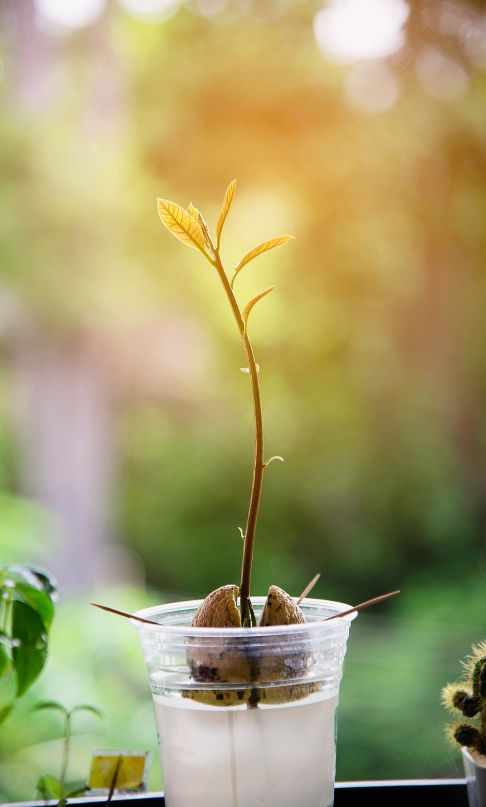
The Royal Horticultural Society’s avocado guide recommends temperatures around 68–77°F (20–25°C) for germination.
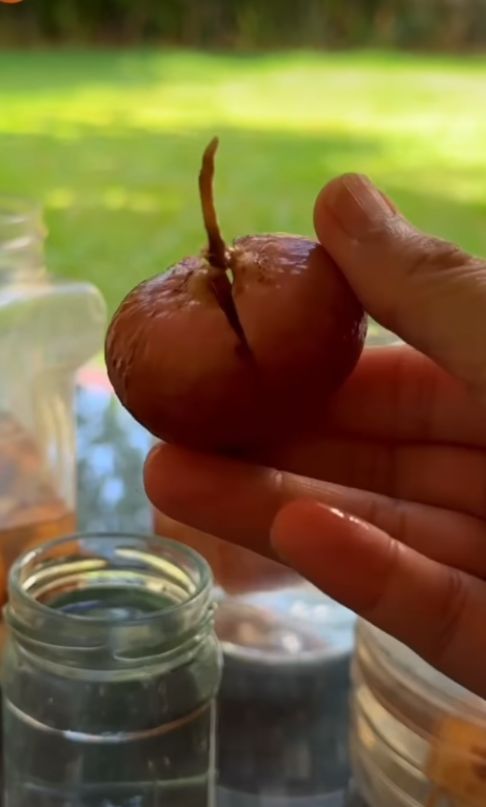
Want to see what happens when an avocado seed begins to germinate? The Instagram video below demonstrates the process, including how the pit splits as the new plant starts developing.
Now comes my favorite part. Initially, nothing happens.
The pit sits there looking exactly as it did when you started. You begin questioning whether you’ve misunderstood the entire process. Then a crack appears.
A pale root pushes downward. Eventually, a reddish-green shoot emerges from the top and begins stretching toward the light.
View this post on Instagram
I don’t care how many sophisticated gardening gadgets someone owns. Watching a discarded seed come alive is far more interesting than another electronic device telling me my houseplant needs water.
You Can Skip the Toothpicks Entirely
Here’s something that might upset the internet’s avocado-growing enthusiasts. The famous glass-and-toothpick arrangement isn’t necessary. You can plant an avocado pit directly in soil.
In fact, Nebraska Extension’s growing instructions explain that starting seeds in a moist, porous soil mixture can produce faster results.
Fill a small pot with well-draining potting mix. Position the pit with its broad end downward, leaving the upper portion exposed. Water it thoroughly, then maintain lightly moist soil in a warm location.
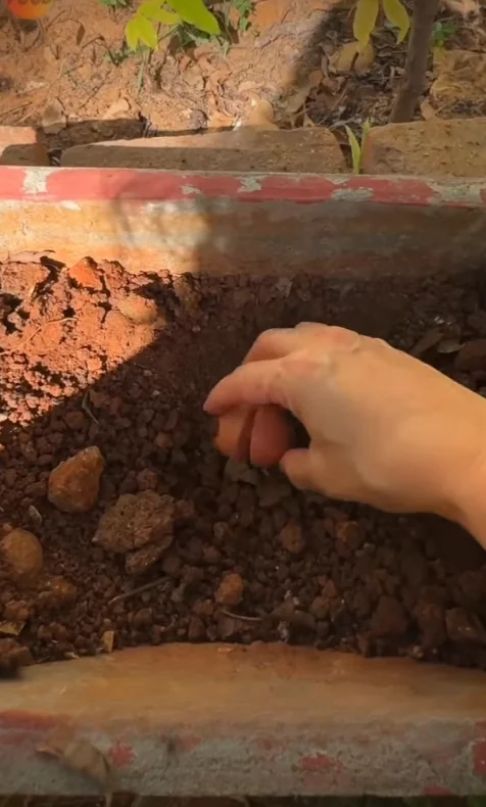
Eventually, the seed should split and sprout. That’s it. Personally, I’d choose the water method for the experience of watching roots develop. But if your priority is establishing a healthy potted plant, starting in soil makes perfect sense.
The glass method is entertaining. It isn’t some superior horticultural secret.
When Should You Move Your Avocado Into Soil?
Once your water-grown seed has developed a substantial root system, a stem, and several leaves, it’s time to give those roots a proper home.
Choose a container approximately 6–8 inches wide with drainage holes. Fill it with a loose, well-draining potting mix.
Gently remove the toothpicks, position the seed with its roots pointing downward, and leave the upper portion of the pit exposed.
Water the soil and allow the excess to drain. Don’t make the mistake of keeping the plant permanently in its original glass simply because it looks attractive.
This avocado plant shows just how much growth is possible from a single seed. The video offers a useful look at what a young avocado tree can become with time and proper care.
Those roots need room, oxygen, and nutrients. I’ve never understood the enthusiasm for growing something beautifully only to deny it the conditions necessary to survive.
Keeping Your Avocado Tree Alive Is the Real Challenge
Germinating an avocado seed is relatively straightforward.
Keeping the resulting plant healthy for years requires considerably more attention.
Light is nonnegotiable. Avocados love brightness. A sunny window can work well indoors, although plants need gradual adjustment before being exposed to intense direct sunlight.
Watering demands some judgment, too.
Keep the soil moderately moist during active growth, but never leave the container sitting in standing water. Check the soil before watering rather than following an inflexible schedule.
Soggy roots can rot, and that’s a miserable way to lose a plant you’ve spent months growing.
Your avocado might also become tall and awkward, with one thin stem reaching toward the ceiling.
Pruning can help. Pinching or cutting back the growing tip encourages branching and a bushier appearance. And don’t forget temperature.
Avocados are frost-sensitive trees. If you live somewhere with freezing winters, your grocery store experiment belongs indoors during cold weather.
The California Avocado Commission’s growing guide also offers advice on watering, pruning, and managing young trees.
One final warning: don’t be surprised if your indoor avocado eventually declines despite reasonable care. Household light and humidity aren’t always sufficient for long-term growth.
That doesn’t necessarily mean you failed.
Will a Grocery Store Avocado Pit Ever Produce Fruit?
Here’s where I’m going to disappoint anyone picturing a backyard full of free avocados.
Growing a tree is realistic. Growing a dependable avocado harvest from a grocery store seed is a gamble I wouldn’t recommend taking.
According to the California Avocado Commission, seed-grown avocado trees may take approximately 7–15 years to begin producing fruit.
And even that isn’t a guarantee. There’s another complication people often overlook. An avocado grown from a seed isn’t genetically identical to the tree that produced it.
Suppose you buy a particularly delicious Hass avocado and grow its pit. You won’t necessarily grow another Hass tree.
The resulting plant could eventually produce avocados with different sizes, textures, and flavors. The quality is unpredictable.
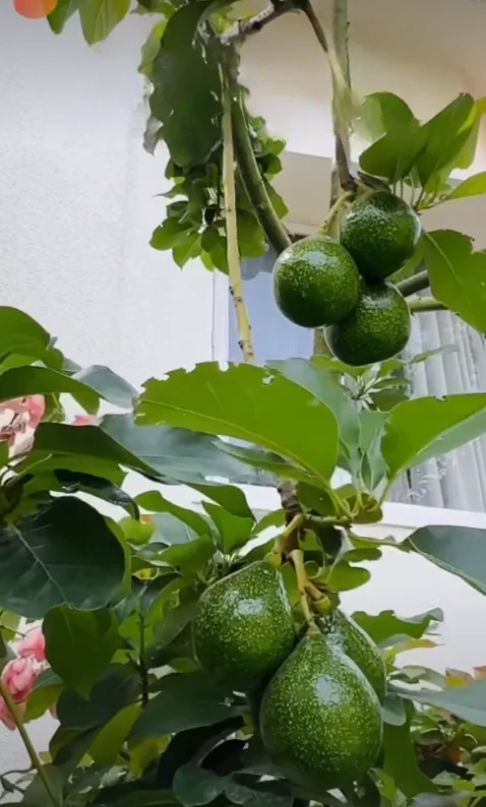
Commercial growers avoid this uncertainty by grafting desirable avocado varieties onto suitable rootstocks.
Grafted trees are generally a much better choice for anyone interested in harvesting fruit. Then there’s pollination. Some avocado varieties benefit substantially from having compatible flowering types nearby.
Add the need for warmth, sunlight, space, and favorable growing conditions, and the dream of harvesting avocados from a windowsill becomes increasingly unrealistic.
The Royal Horticultural Society is particularly clear that avocado houseplants generally don’t flower or fruit indoors.
Frankly, I think promising people endless homegrown guacamole from a glass on their kitchen counter is ridiculous.
If you want avocados, buy a grafted tree suited to your climate. If you want the satisfaction of growing something from practically nothing, plant the pit.
Those are two different ambitions, and there’s nothing wrong with choosing the second.
What If Your Avocado Pit Refuses to Sprout?
Not every seed germinates. Sometimes the pit never cracks. Sometimes it begins developing roots and then deteriorates. Occasionally, a promising seedling struggles after being transplanted.
Before declaring the entire project a failure, consider the obvious suspects.
A cold location can slow germination considerably. Allowing the bottom of the seed to dry out can interrupt the process. Dirty water and excessively wet potting soil can also create problems.
If your pit hasn’t shown any activity after roughly two months under suitable conditions, try another.
And please don’t spend money on expensive products promising miraculous results. You’re trying to germinate a seed, not revive a centuries-old bonsai.
Grow the Tree, Forget About the Harvest
I think we’re becoming a little too obsessed with whether every hobby produces something financially useful.
People ask whether growing avocado trees saves money. Whether gardening is worth the effort. Whether a handmade project could be purchased more cheaply.
Sometimes those are sensible questions. But not everything has to justify itself through financial returns.
Growing an avocado from a pit won’t necessarily save you a cent on groceries. It probably won’t supply your kitchen with fruit. And the plant may eventually outgrow the space you have available. Do it anyway.
There’s real pleasure in noticing the first crack, watching a root find its way downward, and seeing glossy green leaves emerge from something you nearly threw away.
I wouldn’t plant a supermarket avocado pit expecting a productive orchard. I’d plant it because turning kitchen waste into a living tree is remarkable enough.
And sometimes that’s all the reason a project needs.