Machines Still Can’t Crochet, So Every Real Crochet Stitch Was Made by Hand
We have machines that can build cars, assemble smartphones, cut intricate wooden designs, and manufacture thousands of identical sweaters without anyone picking up a knitting needle.
But give those machines a crochet hook and a ball of yarn, and suddenly things get complicated.
It’s one of my favorite little contradictions in modern manufacturing. We’ve spent centuries finding ways to automate practically everything, yet traditional crochet remains overwhelmingly dependent on human hands.
That colorful granny-square cardigan hanging in a clothing store? If it’s genuine crochet, someone almost certainly made those stitches by hand. The same goes for crocheted blankets, bags, dresses, and those little stuffed animals that seem to have taken over every craft market.
There are experimental robots capable of making certain crochet stitches, which we’ll get to shortly. But there’s still no industrial equivalent of a knitting machine producing traditional crocheted garments by the thousands. And I think that’s remarkable.
It also raises a question we probably don’t ask often enough: If someone had to make every stitch, why do we sometimes treat crochet like another cheap factory-made product?
Crochet Isn’t Just Knitting With a Different Tool
If you’ve never tried either craft, knitting and crochet probably look like two versions of the same activity.
For anyone thinking about trying either craft, my guide to crochet vs. knitting for beginners explains which one is easier to learn at home and why.
There’s yarn, there are loops, and eventually there’s something you can wear. Close enough, right? Well, not quite.
Knitting generally works with multiple active stitches held on needles. Crochet typically uses a single hook, with the maker completing stitches one at a time by drawing yarn through existing loops.
The Craft Yarn Council’s explanation illustrates how these different techniques produce fabrics with their own structures and characteristics.
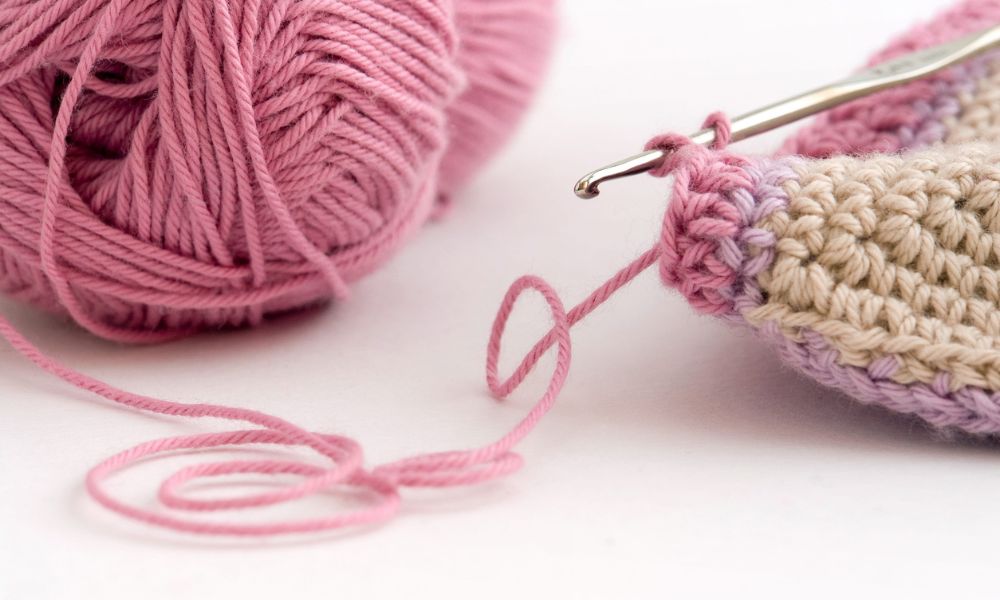
In crochet, the hook goes into a particular stitch or space, catches the yarn, and pulls it through. The crocheter controls the tension, adjusts the position of the fabric, and decides where the next stitch belongs. That last part matters more than it sounds.
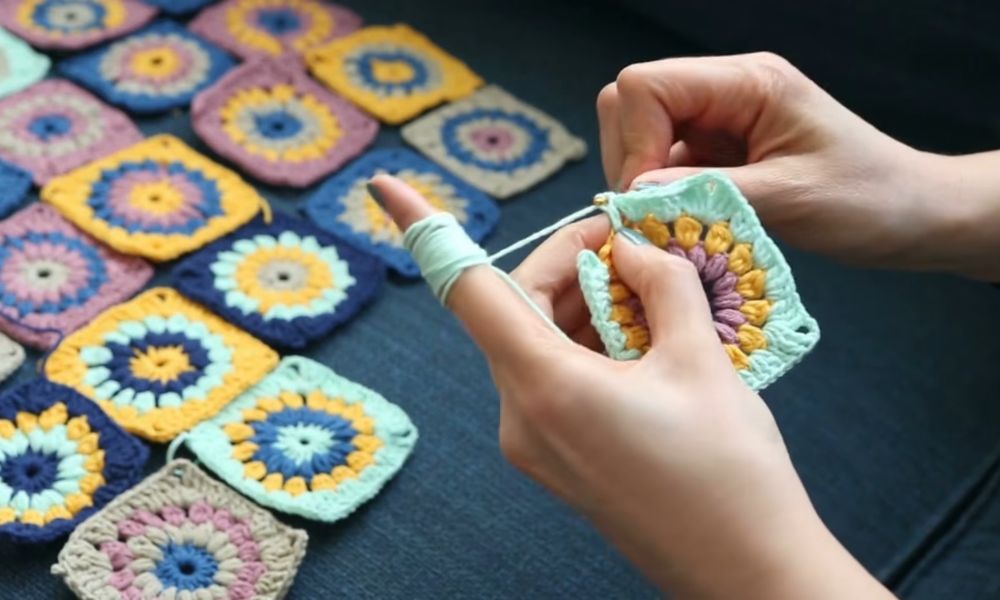
A crocheter making a stuffed animal might work several stitches into one location to widen the shape, then combine stitches to narrow it again. Someone making lace might work into spaces rather than directly into stitches.
A human can look at the fabric, shift it slightly, and make those adjustments almost without thinking. For a machine, they’re separate mechanical problems.
I’ve always found this fascinating about skilled craftsmanship. The movements eventually become so familiar that the person doing them barely notices how much judgment is involved.
Of course, that doesn’t mean the work is simple. It means the person has become very good at it.
Why Knitting Machines Exist but Crochet Machines Struggle
Knitting was mechanized centuries ago. The first stocking frame, developed by William Lee in 1589, laid the groundwork for an industry that eventually became enormously sophisticated.
Modern knitting machines can manipulate large numbers of needles and produce fabric at speeds no hand knitter could reasonably match.
The video below shows a flatbed knitting machine in action. Notice how the machine uses a row of needles to form stitches as the operator guides the yarn and controls the process. It’s a practical example of why knitting lends itself to mechanization, while traditional crochet presents a much more complicated engineering challenge.
Crochet is a different engineering challenge.
A traditional crochet stitch requires the hook to enter an existing loop or space, catch the working yarn, draw it through, and complete the stitch while the surrounding fabric remains properly positioned.
And the movements change depending on the stitch.
Researchers developing a robotic crochet system called Croche-Matic found that their machine required 30 distinct mechanical motions to perform a single crochet stitch. An increase needed 62.
Those details appear in their 2023 robotics research. Thirty mechanical motions for something an experienced crocheter can do in a moment.
As someone who appreciates a well-designed tool, I find that both impressive and mildly ridiculous.
The real headache isn’t simply moving a hook. It’s coordinating the hook, yarn tension, and changing fabric position reliably, over and over again.
A machine might perform one stitch successfully. Repeating that performance through thousands of stitches, different yarns, and complicated patterns is another matter.
Actually, Scientists Have Built Robots That Crochet
Here’s where I have to spoil the neat little story that machines absolutely cannot crochet. Some can.
The Croche-Matic researchers demonstrated a robot capable of making chains, single crochet stitches, increases, and decreases. Their machine could even produce limited three-dimensional forms.
The video below, published by IEEE Spectrum, shows the experimental Croche-Matic robot in action. Developed by researchers at Harvard University, the system demonstrates how a machine can perform crochet stitches and create simple three-dimensional shapes. It’s a fascinating example of how far robotic crochet has progressed, even if the technology is still a long way from replacing skilled human crocheters.
There was a catch: its reported success rate for single crochet stitches was only 50.7%.
Imagine buying a machine that successfully completed roughly half its stitches. You’d probably spend more time fixing mistakes than enjoying your new hobby.
And progress hasn’t stopped there.
Researchers presented a loom-based robotic crochet approach in research published in February 2026, demonstrating another way to automate stitch formation within a constrained fabric structure.
So the absolute claim that no machine has ever made a genuine crochet stitch is no longer correct.
What’s still true is that these experimental systems haven’t replaced people making conventional crocheted clothes and household items commercially.
I actually hope the technology improves. Automation that reduces physically demanding, repetitive work could be useful, provided the benefits reach workers rather than simply giving manufacturers another way to squeeze labor costs.
But for now, the ordinary crochet items we encounter remain very much a product of human skill.
The Uncomfortable Truth About Cheap Crochet Clothing
This is where the whole subject stops being a charming piece of craft trivia. Suppose you walk into a clothing store and spot a crocheted top selling for an unusually low price.
If it’s genuine hand crochet, someone has spent time making it. Possibly several people worked on different components before the garment was assembled.
The price tag doesn’t tell you how many hours that took. It certainly doesn’t tell you how much the maker earned.
Why can a handmade crochet top sometimes cost just $15? The video below explores the hidden labor behind inexpensive crochet clothing and the challenges of automating traditional crochet stitches. It also raises an uncomfortable question about how much we value the time and skill of the people making these garments.
And that bothers me considerably more than whether a robot can hold a crochet hook.
The Croche-Matic researchers themselves raised concerns about the labor conditions potentially associated with low-cost, commercially sold crochet products.
Those concerns fit into a larger problem. The U.S. Department of Labor has documented exploitation within garment manufacturing, including situations where workers haven’t received legally required pay.
That doesn’t establish that every inexpensive crochet garment was produced under abusive conditions. It would be irresponsible to make that assumption.
But it does give shoppers a reason to ask questions. Handmade isn’t automatically synonymous with ethical.
Someone can spend hours producing beautiful work and still receive terrible compensation.
I think we sometimes romanticize handmade products so enthusiastically that we forget about the people making them.
We admire the craftsmanship, celebrate the traditional techniques, and compliment the finished garment.
Then we get annoyed when the price isn’t comparable to something mass-produced. We can’t reasonably have it both ways.
Not Everything Labeled Crochet Is Actually Hand-Crocheted
There’s another wrinkle worth understanding before you start examining every sweater in your closet.
Some manufacturing equipment is advertised as crochet machinery, and there are fabrics that look remarkably similar to traditional crochet.
Industrial processes such as warp knitting can produce openwork textiles, decorative trims, and repeating patterns that resemble crocheted fabric.
Not all knitting machines look or operate the same way. Compact circular knitting machines, like the one shown below, offer another example of how knitted fabric can be produced mechanically. However, the process is different from traditional crochet, even when the finished products look similar.
View this post on Instagram
But a crochet-like appearance doesn’t necessarily mean the fabric was constructed using traditional crochet stitches.
The distinction is super important. A lacy machine-knitted top isn’t inherently inferior to a hand-crocheted one. It may be attractive, durable, and perfectly suitable for its intended purpose.
What I object to is confusion about how something was made.
If a product is presented as hand-crocheted, buyers should be able to trust that description.
And while certain stitch structures can offer clues, appearances alone don’t always provide a reliable answer.
If authenticity matters to you, ask the seller how the item was produced, where it was made, and whether the crocheting itself was done by hand.
A seller who knows the work should be able to give you more than a vague description about artisanal charm.
Handmade Doesn’t Mean Perfect, and It Shouldn’t Have To
I’ve always had a soft spot for objects that show a little evidence of the person who made them.
That’s true of woodworking, painting, and textile crafts alike.
A handmade wooden box might have a tiny variation in its joinery. A painted piece might reveal subtle differences in brushwork. A crocheted blanket might have slightly different stitch tension in one corner.
Not every irregularity is a beautiful artistic decision, obviously. Sometimes a mistake is just a mistake.
And plenty of handmade products are so precisely executed that you’d struggle to find any variation at all.
But I dislike the idea that good craftsmanship must look indistinguishable from factory production.
Part of what makes handmade work interesting is the relationship between the maker, the material, and the finished object.
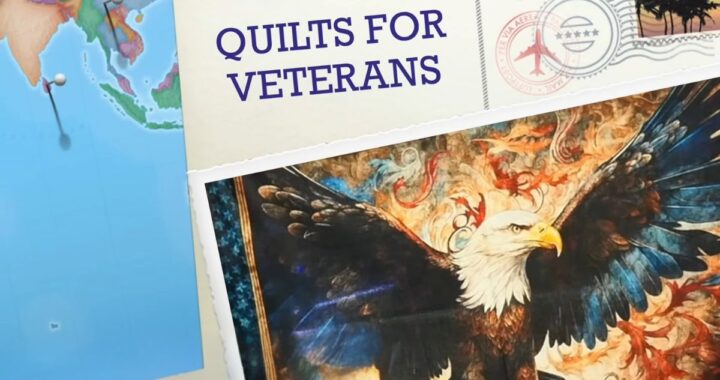
That connection becomes especially meaningful in the story of Quilts for Veterans, where volunteers turn ordinary fabric and countless hours of work into personal tributes to military service.
That’s one of the reasons I enjoy exploring how things are made. It’s also a big part of the craftsmanship-minded perspective we bring to Topikaro.
The finished product matters, but understanding the work behind it makes the object more interesting.
And sometimes it makes the price easier to understand, too.
So What Should Handmade Crochet Cost?
Sadly, there’s no universal answer. A simple cotton coaster and an elaborate crocheted wedding dress involve completely different amounts of time, materials, and expertise.
The yarn matters. So does the complexity of the pattern, the quality of the finishing, and the maker’s experience.
A fair price should also account for the time spent planning, correcting mistakes, assembling components, and communicating with customers.
I wouldn’t automatically pay a premium for something just because it carries a handmade label.
I’ve seen enough badly executed DIY work to know that effort and quality aren’t interchangeable.
But I also wouldn’t expect someone to spend an entire weekend crocheting a complicated item and then sell it for barely more than the cost of the yarn.
If you’re purchasing directly from a maker, ask about the materials and construction. Look closely at the stitching and finishing. Find out how the piece should be washed and maintained.
And if you’re buying from a large retailer, consider whether the company explains where its handmade products come from.
Transparency doesn’t guarantee fair treatment, but it’s a better starting point than an attractive label with no information behind it.
The Most Important Part Isn’t That Machines Can’t Do It
There’s something appealing about discovering a traditional craft that industrial machinery still struggles to reproduce.
But I don’t think we should turn crochet into a competition between humans and machines.
Technology advances. The experimental systems being developed today might eventually become practical manufacturing tools.
And if that happens, crochet won’t suddenly lose its history, beauty, or importance as a personal craft.
People still make furniture by hand despite the existence of CNC routers. They still paint despite having digital printers. They still knit, sew, and carve because making something can be satisfying in its own right.
Crochet will have a place in that world, too. For now, though, genuine hand-crocheted garments and accessories deserve recognition for what they are.
Someone chose the yarn. Someone controlled the tension. Someone worked through those stitches, probably corrected a few mistakes, and kept going until the piece was finished.
That person deserves more consideration than a tiny handmade label tucked inside the garment.
Because the most remarkable thing about crochet isn’t that machines struggle with it. It’s how easily we’ve learned to overlook the people who don’t.