Is It Quicker to Crochet or Knit a Blanket? How Many Hours Does Each Take?
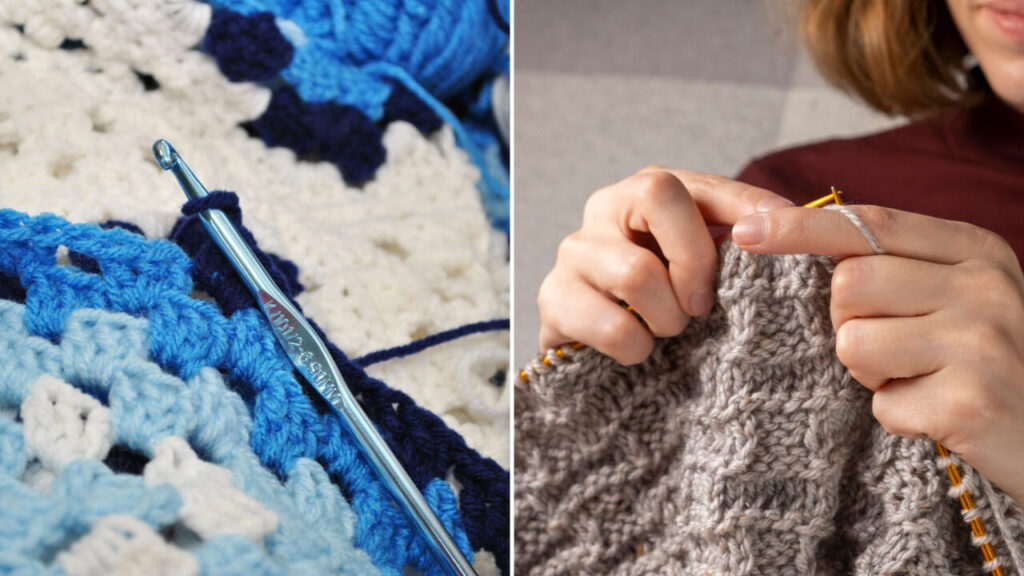
A blanket is one of those projects that looks wonderfully manageable until you realize just how many stitches are standing between you and the finish line.
You work for an hour, spread your creation across your lap, and discover you’ve made approximately enough fabric to cover a small dog.
If you’re deciding between crochet and knitting, I have a fairly straightforward recommendation: crochet is generally the faster way to make a blanket.
The difference can amount to several hours on a baby blanket and considerably more on a large throw. And there are actual timed experiments that help explain why.
Is It Faster to Crochet or Knit a Blanket?
Crochet usually wins because its stitches can cover more surface area in less time, especially when you’re using taller stitches such as half double crochet or double crochet.
Knitting generally involves forming smaller interconnected loops, meaning you’ll often work more rows to achieve the same blanket length.
Fiber artist Brooke Ali decided to test the difference. In her knitting versus crochet speed experiment, she made two 4-inch squares using the same acrylic yarn and 5 mm tools.
She knitted one square in stockinette stitch and crocheted the other in single crochet.
Here were her results:
- Crochet: 15 minutes, 43 seconds
- Knitting: 21 minutes, 54 seconds
Crochet finished approximately 28% faster.
That’s one maker testing two particular stitches, so the result isn’t a universal rule. Still, I think it’s a useful demonstration of something experienced crafters have been saying for years.
And once you start multiplying those minutes across an entire blanket, the difference becomes substantial.
How Many Hours Does It Take to Crochet or Knit a Blanket?
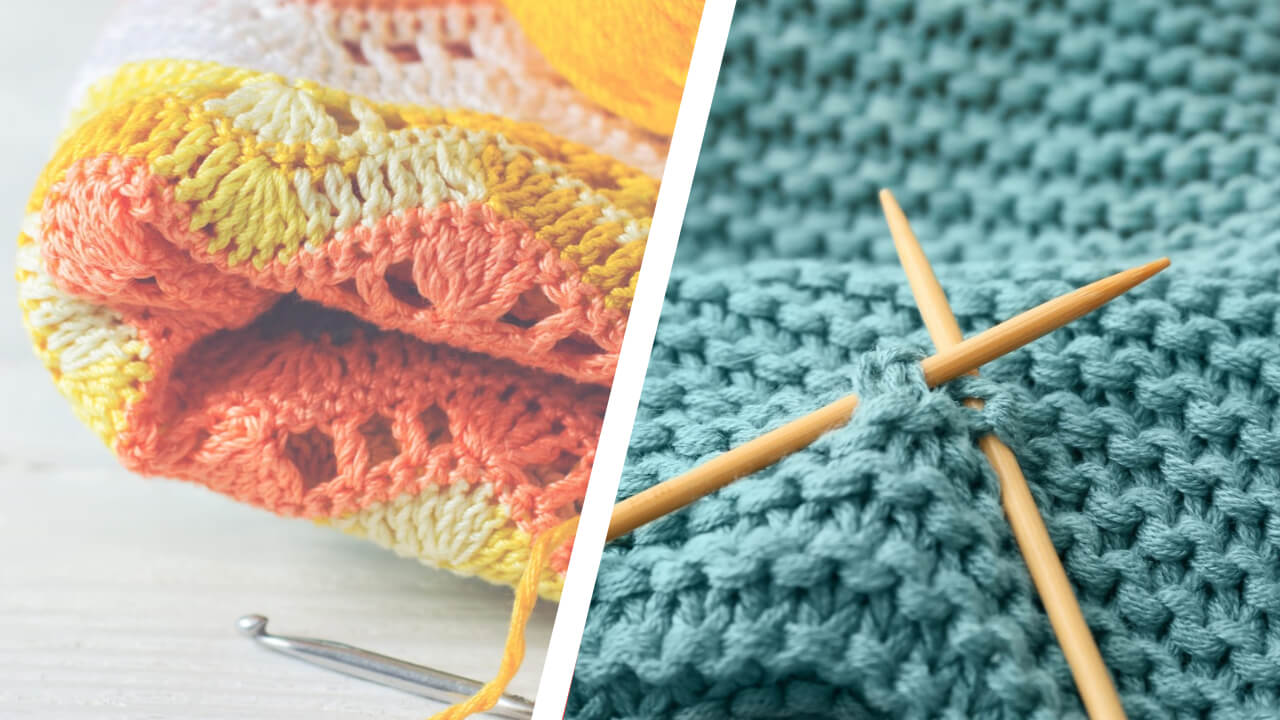
Let’s turn that experiment into something useful.
If we take Brooke Ali’s recorded times and scale them up to common blanket sizes, here’s what the numbers look like.
Blanket size
Crochet
Knitting
Small baby blanket (24 × 24 inches)
About 9.5 hours
About 13 hours
Baby blanket (30 × 36 inches)
About 18 hours
About 25 hours
Couch throw (50 × 60 inches)
About 49 hours
About 68 hours
These are illustrative projections calculated from one person’s timed 4-inch squares, using single crochet and stockinette stitch. They assume the same pace continues throughout the project and exclude finishing. Actual completion times can differ substantially.
Look at that final row. The projected difference is almost 20 hours. That’s several evenings of additional work for someone who spends two or three hours crafting after dinner.
There are also useful real-world estimates. Darn Good Yarn’s blanket guide suggests approximately 40–60 hours to knit a 50 × 60-inch throw in garter stitch using worsted-weight yarn.
For crochet, a social-media survey of 1,004 crocheters found that 92.3% reported spending more than 20 hours on their average blanket. The survey was self-reported and didn’t standardize blanket sizes or techniques.
My advice is to budget at least 25–40 hours for a conventional crocheted throw and around 40–60 hours for a comparable knitted project. Consider those planning allowances for relatively simple patterns in medium-weight yarn.
The Yarn You Choose Can Save You an Entire Weekend
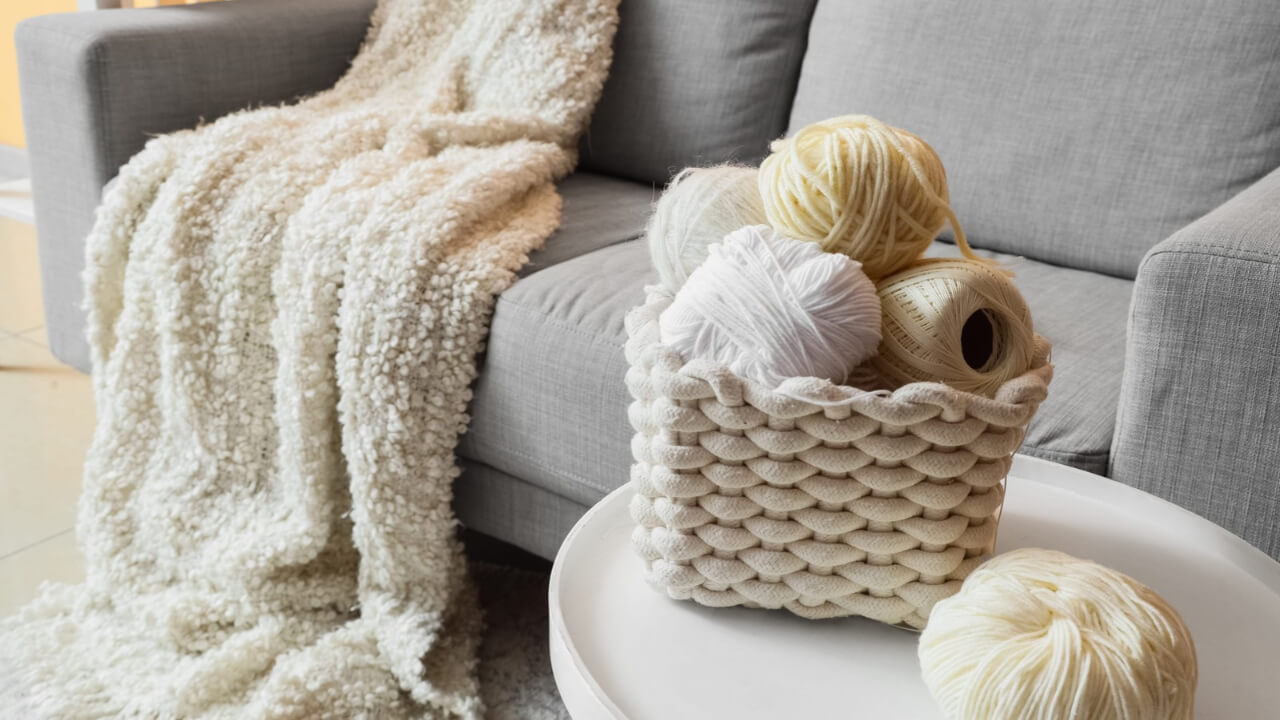
If speed is your priority, yarn thickness deserves your attention before you even choose a stitch pattern.
Thicker yarn creates larger stitches. Larger stitches cover more space. And fewer stitches mean fewer hours of repetitive work.
For example, Sarah Stearns of Sarah Maker published a chunky crochet blanket pattern measuring approximately 48 × 54 inches, with an estimated active time of just 10 hours.
That’s a substantial throw blanket made with super-bulky yarn and a 12 mm hook.
Compare that with the dozens of hours often required for a similar project in medium-weight yarn.
The difference is remarkable.
For anyone trying to finish a handmade Christmas present during the final week before Christmas, I’d make three decisions immediately:
- Choose bulky or super-bulky yarn.
- Pick a simple, repetitive stitch pattern.
- Work the blanket in one piece to avoid joining dozens of separate squares.
You can absolutely create an elaborate blanket with delicate yarn and intricate stitches. Just give yourself the time that craftsmanship deserves.
Crochet Is Faster, and There’s a Price for That Speed
View this post on Instagram
Here’s something worth considering before you fill your shopping basket with yarn.
Crochet often consumes more yarn than knitting when producing the same amount of fabric.
In an experiment published by Interweave, designer Amy Gunderson compared yarn consumption across several knitted and crocheted stitch samples.
Her measurements showed that single crochet used approximately 60% more yarn per square inch than stockinette knitting.
The exact difference changes with stitch selection, gauge, and fabric density. That matters when you’re buying yarn for a large blanket.
A few additional skeins of inexpensive acrylic might be manageable. Several extra skeins of premium wool can turn an already expensive project into a serious investment.
I would still choose crochet for a blanket with a deadline. I’d simply calculate the required yardage before committing to a particular yarn.
The Hours Nobody Remembers to Count
When I think about estimating projects, I often remember watching my grandfather work in his workshop.
He understood that making something involved far more than the exciting part where the object started taking shape.
There was measuring, adjusting, correcting, and finishing. Blankets have exactly the same problem.
People remember the hours spent working rows. They conveniently forget everything that happens afterward.
Consider a granny-square blanket. You might spend 20 minutes crocheting each square. Make 80 squares, and you’ve already invested more than 26 hours.
Then comes the joining. And the border. And weaving in all those loose yarn ends. Suddenly, a project you thought was nearly finished still has several evenings of work ahead.
In my opinion, a blanket isn’t finished until the last loose end is secured.
This is also why I strongly recommend uncomplicated construction for a first blanket. In my earlier article comparing crochet and knitting for beginners, I explained why manageable projects give beginners a better chance of building confidence.
A blanket with a simple repeating pattern is a sensible next step once you’ve practiced the basic stitches.
How to Calculate How Long Your Own Blanket Will Take
Fortunately, there’s a much more reliable way to estimate your project than trusting someone else’s completion time.
You can measure your own speed.
Here’s the method I’d use:
- Make a test swatch. Use your chosen yarn, hook or needles, and the exact stitch pattern you intend to follow.
- Time your work. Spend 15–20 minutes working at your normal, comfortable pace.
- Measure the finished area. Calculate how many square inches you completed during that session.
- Scale up to your blanket. Divide the blanket’s total area by your hourly production rate, then add time for borders and finishing.
Let’s say you complete 100 square inches in one hour.
Your planned blanket measures 50 × 60 inches, giving you 3,000 square inches.
At that pace, the main fabric would take approximately 30 hours.
Allow additional time for finishing, and you might budget around 33–36 hours.
It’s a straightforward calculation, and it accounts for your actual experience and working style.
I trust this approach far more than videos promising enormous blankets in a single afternoon.
Is Crochet or Knitting Better for a Beginner’s First Blanket?
I’d choose crochet. The quicker progress is one reason. Another is how straightforward it can be to correct mistakes.
With crochet, you generally have just one active loop on your hook. If something goes wrong, you can unravel your work to the mistake and begin again.
Knitting usually keeps an entire row of stitches active on the needles, making some corrections more involved.
And there’s something satisfying about watching a crochet blanket grow visibly after every session.
In my article about why machines still can’t crochet, I discussed the remarkable amount of human control involved in creating traditional crochet stitches.
That same handwork makes finishing a blanket meaningful.
You can look at the finished fabric and know somebody spent hours building it, stitch by stitch.
For a beginner, I’d recommend a small throw in bulky yarn using a simple half double crochet stitch. It’s a substantial enough project to feel rewarding, with a realistic chance of being completed before enthusiasm disappears.
My Verdict: Crochet Wins the Race
If your main concern is getting a handmade blanket finished sooner, I recommend crochet.
A straightforward crocheted throw may take around 25–40 hours, with chunky designs potentially requiring considerably less. A conventional knitted throw can easily demand 40–60 hours or more.
Choose the yarn carefully, keep your first pattern simple, and measure your actual working speed before committing to an ambitious deadline.
And remember, every handmade blanket represents hours of someone’s attention.
That’s worth appreciating, regardless of which tool they used to make it.