America’s Jigsaw Champion Finished 500 Pieces in 30 Minutes and 39 Seconds
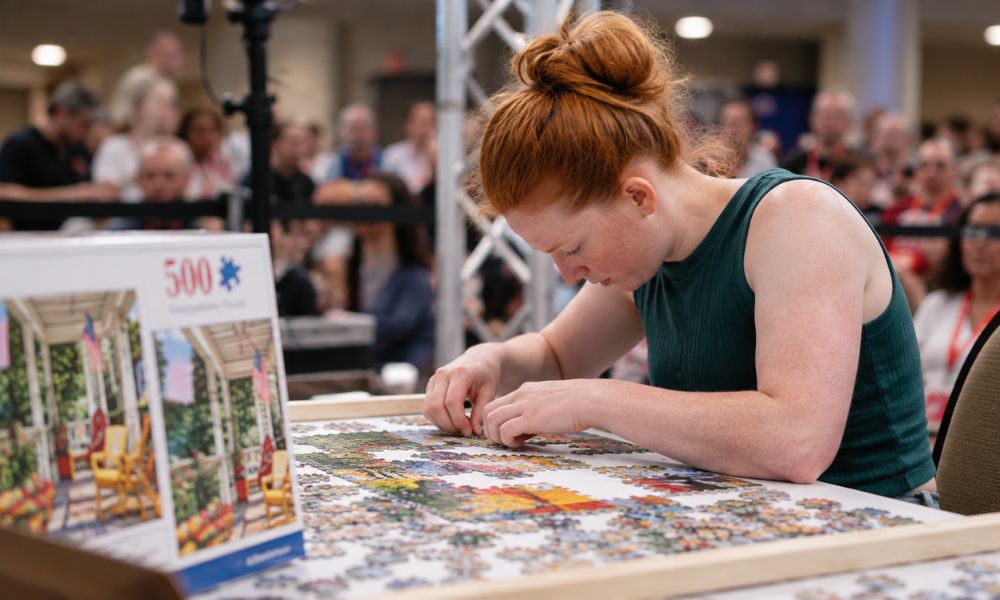
The Stanford University student achieved that remarkable time during the qualifying rounds on March 27. Two days later, she won the individual national championship, finishing another 500-piece puzzle in 37 minutes and 19 seconds.
I’ve always thought jigsaw puzzles were interesting because they turn a simple activity into hundreds of small decisions. Finding the right piece feels satisfying regardless of how long it takes.
Doing it 500 times in barely half an hour, though? That’s an entirely different level of skill.
And Rowe’s performance raises an interesting question: How do you become so good at something most people deliberately take their time doing?
Watch Alice Rowe in action at the 2026 USA Jigsaw Nationals, where she established a new American speed-puzzling record.
View this post on Instagram
Alice Rowe Absolutely Dominated
The 2026 USA Jigsaw Nationals, held March 27–29 in Atlanta, brought together competitors for individual, pairs, and team events.
The individual competition featured four preliminary rounds, each accommodating 200 puzzlers. The fastest 50 from each round advanced to the final, where everyone faced another 500-piece puzzle.
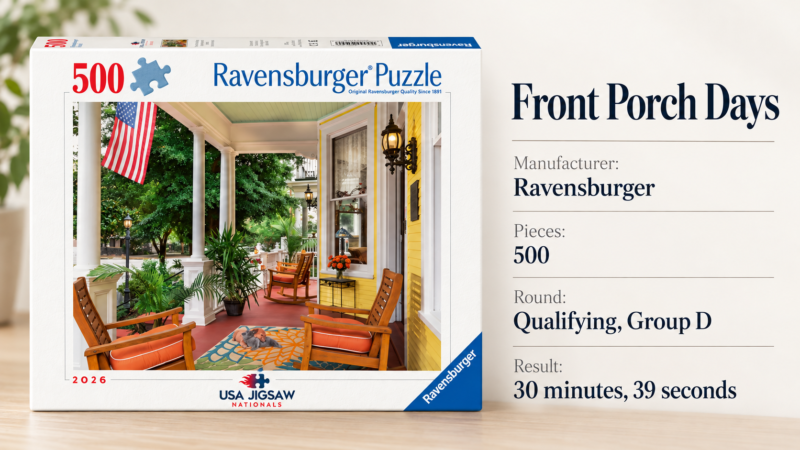
Rowe’s qualifying performance was extraordinary even by championship standards.
She completed her puzzle in 30:39, finishing 7 minutes and 49 seconds ahead of the second-place competitor in her heat, Cathy Roiter.
Then came the final.
Rowe won by 3 minutes and 29 seconds, according to the official final standings.
I find that winning margin almost as impressive as her record. A strong qualifying performance is one thing. Repeating that dominance with a different puzzle, against the country’s best competitors, makes a much stronger case for genuine mastery.
There’s also a detail worth emphasizing. The 30:39 record came during qualifying, not the championship final. Both performances deserve recognition without mixing them together.
Just How Fast Is 500 Pieces in 30 Minutes?
Let’s put Rowe’s record into perspective.
- 500 pieces assembled by one person.
- 30 minutes, 39 seconds from start to finish.
- Approximately 16.3 pieces per minute.
- An average of 3.7 seconds per piece, including sorting and searching.
That last number is ridiculous in the most complimentary sense.
A jigsaw puzzle doesn’t hand you pieces in the correct order. You have to identify visual patterns, organize the available pieces, recognize shapes, and work out where everything belongs. And every incorrect guess costs time.
Speed puzzling rewards efficiency more than frantic movement. Someone constantly grabbing pieces and trying them in random spaces might look busy, but they’re wasting valuable seconds. A great puzzler minimizes unnecessary decisions.
It’s similar to what separates experienced strategy-game players from beginners. Experts aren’t necessarily thinking harder about every individual move. They’ve learned to recognize useful patterns and eliminate bad options before spending time on them.
The same principle makes sense here. When you’ve already trained yourself to recognize where pieces belong, your hands can spend more time assembling and less time searching.
The Strategy Behind Competitive Speed Puzzling
Competitive puzzling has more going on beneath the surface than people realize.
At the national championship, competitors work with previously unreleased Ravensburger puzzles.
That prevents anyone from simply memorizing a completed puzzle they’ve already practiced.
Instead, they must adapt their techniques to unfamiliar images.
Sorting Is Part of the Competition
Before assembling much of anything, a puzzler needs to make hundreds of pieces manageable.
Grouping pieces by color, texture, or recognizable objects reduces the number of possibilities to search through.
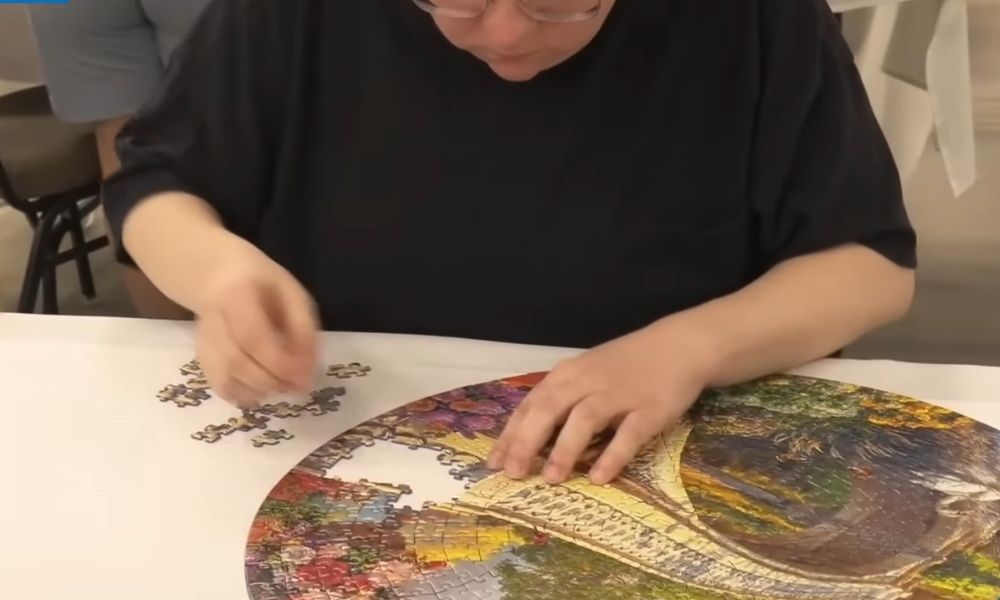
Think about a puzzle showing a village. Pieces containing bright red rooftops belong to a much smaller group than the entire 500-piece pile.
That sounds obvious. The interesting decision is how much time to spend sorting before building.
Sort too little, and you’ll keep searching through the same enormous pile. Sort excessively, and you’ve spent precious minutes organizing pieces that could already be connected.
I like that tradeoff because there’s no universally perfect answer. The image itself should influence the strategy.
Starting With the Border Isn’t Always Best
Most people learn to complete the border first. It’s sensible advice for recreational puzzling, but competitive players don’t always follow it.
A puzzle might have dozens of nearly identical blue sky pieces around its outer edge. Meanwhile, a colorful building in the center could be much easier to assemble.
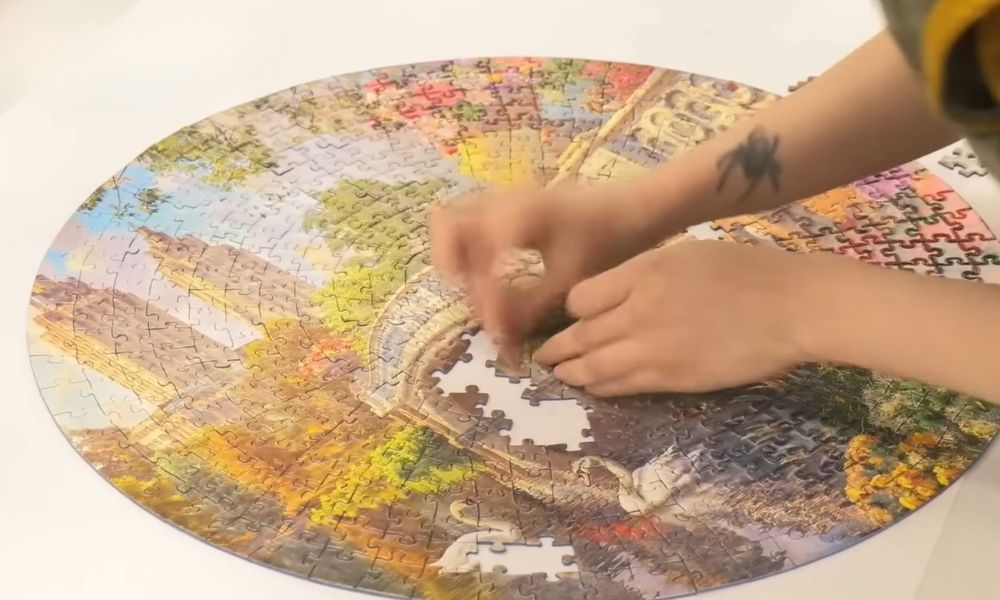
In that situation, focusing on the obvious section first could produce faster progress. The speed-puzzling tips collected here also recommend switching sections when you get stuck instead of repeatedly testing pieces that aren’t working.
That’s the kind of decision I appreciate. A good strategy doesn’t become a rule you follow blindly. It changes when the situation changes.
Rowe’s Speed Comes From Years of Practice
Rowe’s achievement becomes more interesting when you look at how she developed her skills.
According to an interview with The Stanford Daily, she became especially interested in jigsaw puzzles during the COVID-19 pandemic and began timing her attempts in summer 2022.
Her first national competition came in 2024, when she won the individual championship as a high school student. She also finished 24th at the 2024 World Championship.
By winning again in 2026, she became the first two-time individual national champion in the competition’s history.
Practice Makes Recognition Almost Automatic
Before the 2026 championship, Rowe dedicated substantial time to completing puzzles after finishing her winter-quarter exams. She credited repetition and muscle memory for much of her speed.
That explanation makes more sense to me than describing her talent as some mysterious ability to instantly recognize 500 unrelated shapes.
Repetition develops familiarity. You start noticing recurring patterns, recognizing useful visual clues, and making decisions without having to reconsider every possibility.
However, I wouldn’t reduce her performance to practice alone. Maintaining that recognition under competitive pressure, with an unfamiliar image and other strong puzzlers nearby, is another skill entirely.
Rowe also competes in Stanford club rugby, making her combination of academic commitments, athletics, and competitive puzzling particularly interesting.
Speed Puzzling Is Becoming a Serious Competitive Hobby
Jigsaw puzzling probably isn’t the first activity people imagine when discussing competitive sports. Yet the scene has grown considerably.
The 2026 national convention attracted more than 1,600 attendees, including over 1,000 competitors, according to The Guardian’s coverage.
The event featured individual races, pairs competitions, team challenges, livestreams, and activities for enthusiasts who weren’t competing.
The official USA Jigsaw Nationals 2026 individual final offers a closer look at the atmosphere, competition, and speed required at the national championship.
Rowe also helped her team, the Jiggernauts, win the 2026 team championship. That event required four-person teams to complete two 1,000-piece puzzles. I particularly like the team format because it changes the challenge.
Individual puzzling rewards personal organization and recognition. Team puzzling introduces communication, coordination, and the problem of several people working around the same table.
Having four skilled puzzlers doesn’t automatically make a good team. Their approaches need to complement one another.
There’s something appealing about a hobby that accommodates both intense individual competition and genuine cooperation.
And unlike some competitive gaming communities, where newcomers can encounter plenty of unnecessary gatekeeping, speed puzzling appears to have developed a notably welcoming atmosphere. That deserves recognition alongside the impressive finishing times.
Want to Try Speed Puzzling Yourself?
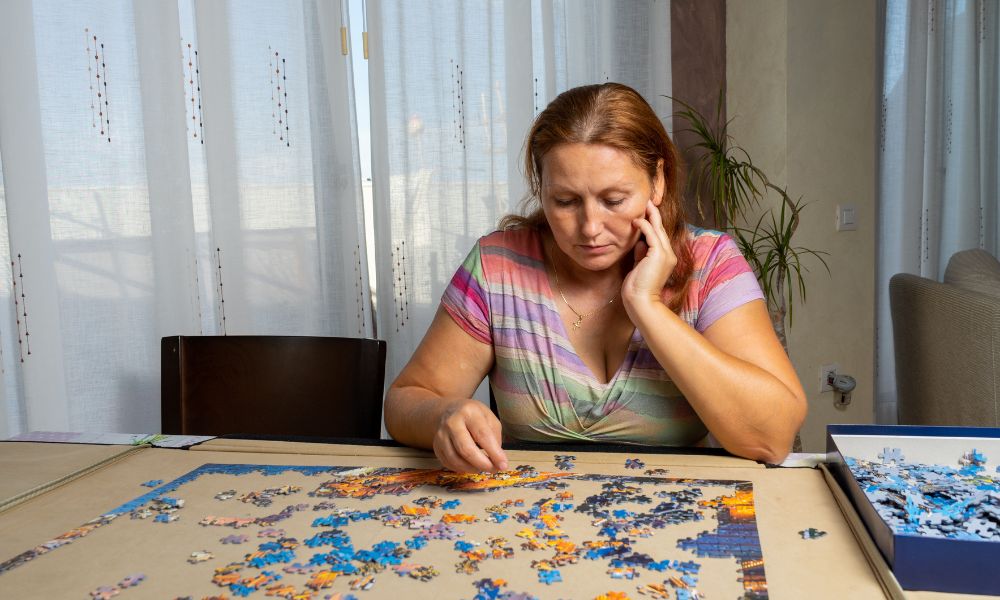
You don’t need championship ambitions to experiment with timed puzzles.
I’d recommend starting with a 500-piece puzzle and treating your first attempt as a baseline rather than a competition against Rowe’s record.
A few useful approaches are worth trying:
- Choose a puzzle with distinct colors and objects. It makes recognizing sections easier while you’re learning.
- Start a timer when you begin. Include sorting and preparation in your completion time.
- Organize pieces into manageable groups. Avoid constantly searching through the entire pile.
- Try different starting points. Compare building the border first with assembling distinctive sections.
- Move on when you’re stuck. Repeatedly examining the same piece rarely improves your chances.
- Track your results. Different puzzle images vary in difficulty, so compare several attempts rather than treating one time as definitive.
I’d also suggest something that gets overlooked whenever a relaxing hobby becomes competitive: don’t assume being faster automatically means having more fun.
If you enjoy spending an entire evening slowly assembling a landscape, there’s no reason to replace that experience with a stopwatch. Speed puzzling is another way to enjoy the hobby, not a superior one.
A Remarkable Record, and an Interesting Future
Alice Rowe’s 30:39 record demonstrates just how much skill can develop around an activity that appears simple from the outside.
Her success isn’t merely about moving pieces quickly. It’s about recognizing patterns, organizing information, making efficient decisions, and practicing until complicated tasks become familiar.
What I find most encouraging is that competitive puzzling doesn’t require expensive technology or elaborate equipment. At its core, the challenge still comes down to a table, some cardboard pieces, and an interesting problem to solve.
Rowe has shown how far someone can take that challenge. Personally, I’m curious how much faster the best competitors can become. Breaking the 30-minute barrier at a future national championship would be a fascinating milestone.
And after watching the sport develop, I wouldn’t bet against someone eventually doing exactly that.